When the Holidays Feel Heavy: Why This Season Is Hard for Some People
Everyone around you seems to be celebrating. The music is playing, the decorations are up, and social media is full of perfect family gatherings and grateful captions.
But you're struggling.
Maybe you're overwhelmed by everything on your plate. Maybe you're dreading family gatherings. Maybe you don't celebrate Christmas and you're exhausted from explaining that, again. Maybe this is your first holiday season without someone you love. Maybe the shorter days and less sunlight are affecting your mood more than you expected.
Whatever the reason, you're not feeling the joy everyone else seems to be feeling. And you might be wondering if something's wrong with you.
There isn't.
The holidays are genuinely hard for a lot of people. Not because they're ungrateful or joyless, but because this season brings unique stressors, painful reminders, and expectations that feel impossible to meet. Also, if you are a woman, women often carry the mental load of the holidays.
If the holidays feel heavy instead of bright, you're not alone. And you don't have to just push through until January.

Why the Holidays Are Particularly Difficult
The cultural narrative around the holidays is relentlessly positive. It's supposed to be the "most wonderful time of the year." But for many people, it's actually the most stressful, lonely, or painful.
Here's why:
The Pressure to Be Happy
There's an unspoken expectation that everyone should be joyful during the holidays. If you're not feeling festive, you might feel like you're failing, or like you have to fake it.
But forcing yourself to feel something you don't feel is exhausting. And when everyone around you seems genuinely happy, it can make your struggle feel even more isolating.
Everything Is Too Much
Even if you enjoy the holidays, the sheer volume of demands can be overwhelming:
Shopping for gifts (and the financial stress that comes with it)
Planning and hosting gatherings
Attending work parties, neighborhood events, school functions
Cooking, baking, decorating
Coordinating schedules with family
Managing kids' excitement and expectations
Trying to maintain your regular responsibilities on top of all the "extra"
It's not just busy, it's relentless. And if you're already managing anxiety, depression, or burnout, adding holiday demands can push you over the edge.
Family Dynamics Get Amplified
The holidays often mean spending time with family. For some people, that's comforting. For others, it's a source of significant stress.
Maybe your family has unresolved conflict, different political or religious views, or a painful history. Maybe they make comments about your life choices, your body, your relationships, or your career that would have been better not said. Maybe you're the one who has to manage everyone's emotions and keep the peace.
Or maybe your family gatherings are happy, but you still feel pressure to perform, to be "on," to meet expectations, or to explain yourself.
Either way, navigating family dynamics during the holidays can be draining and emotionally triggering.
Grief Hits Harder
If you've lost someone, whether recently or years ago, the holidays can intensify that grief.
Every tradition feels different without them. Every gathering has an empty chair. The cultural emphasis on togetherness and family makes their absence feel sharper.
And if the loss happened during the holiday season, anniversaries can bring it all back with overwhelming force.
People might tell you "they'd want you to be happy" or "it gets easier with time." But grief doesn't follow a timeline, and the holidays have a way of reopening wounds you thought had healed.
You Don't Celebrate, But Everyone Assumes You Do
Not everyone celebrates Christmas. If you observe different holidays, practice a different faith, or don't celebrate at all, December can feel alienating.
Work parties are Christmas-themed. Neighborhood events center around Christmas traditions. People wish you "Merry Christmas" and seem surprised or uncomfortable when you don't celebrate.
You're navigating a world that assumes everyone participates in the same traditions, and opting out, declining invitations, or explaining your beliefs gets exhausting.
Seasonal Affective Disorder (SAD) Makes Everything Harder
Shorter days and less sunlight affect your brain chemistry. For some people, this leads to Seasonal Affective Disorder, a type of depression that occurs during specific seasons, typically fall and winter.
SAD can cause:
Low energy and fatigue
Difficulty concentrating
Changes in sleep (sleeping too much or insomnia)
Changes in appetite (often craving carbs)
Loss of interest in activities
Feelings of hopelessness or worthlessness
Social withdrawal
When you're already dealing with SAD, the demands and expectations of the holidays become even more difficult to manage.
Financial Stress Intensifies
Gift-giving, travel, hosting, special meals, the holidays are expensive. If you're already managing financial strain, the pressure to spend money you don't have can create significant anxiety.
And there's often guilt attached: guilt about not being able to afford what you wish you could, guilt about saying no to events because of cost, guilt about feeling stressed about money when you "should" be focusing on gratitude.
Loneliness Feels More Acute
If you're single, estranged from family, living far from loved ones, or going through a major life transition, the holidays can intensify feelings of loneliness.
The cultural emphasis on gathering with family and loved ones makes being alone, or feeling alone even in a crowd, more painful during this season.
You're Not Ungrateful. You're Human.
If you're struggling during the holidays, you might be telling yourself things like:
"Other people have it worse. I should be grateful."
"I'm being too sensitive. It's not that big a deal."
"Everyone else seems fine. What's wrong with me?"
Here's what you need to hear: Your struggle is valid.
You can be grateful for what you have and still find the holidays difficult. You can love your family and still feel drained by family gatherings. You can appreciate the sentiment of the season and still feel overwhelmed by all the demands on you.
These things aren't mutually exclusive.
Struggling doesn't mean you're ungrateful, weak, or broken. It means you're human, navigating a season that brings unique challenges, and that's okay.
What Actually Helps
If the holidays feel heavy, here are some things that might help, not to make it all perfect, but to make it more manageable.
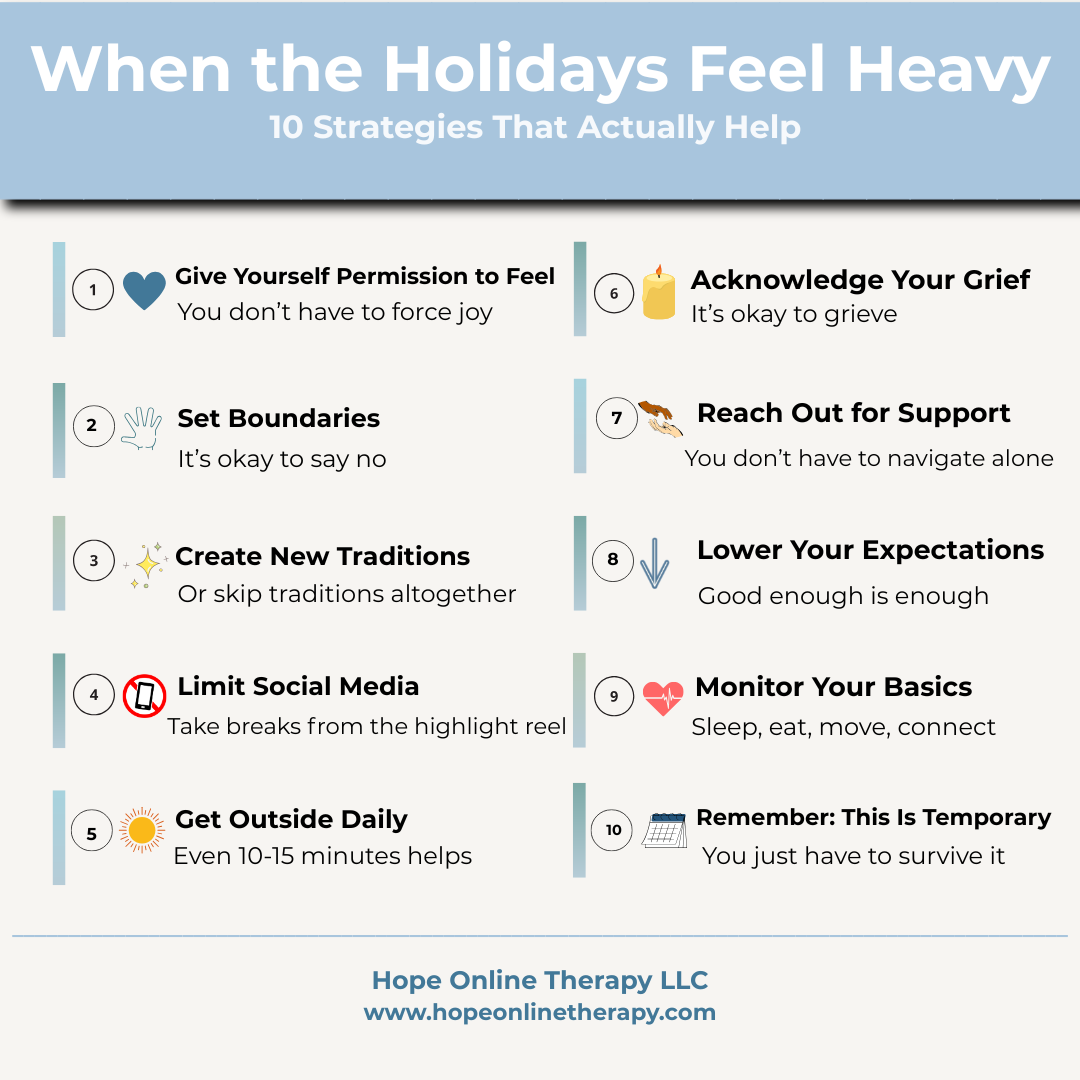
1. Give Yourself Permission to Feel What You Feel
You don't have to force joy. You don't have to fake enthusiasm. You're allowed to feel sad, stressed, anxious, lonely, or overwhelmed during the holidays.
Acknowledging what you're actually feeling, instead of what you think you should feel, is the first step toward taking care of yourself.
2. Set Boundaries (Even If It Feels Uncomfortable)
You don't have to attend every event. You don't have to host if you're not up for it. You don't have to spend money you don't have on gifts. You don't have to engage in conversations or traditions that drain you.
Boundaries might sound like:
"I'm not able to make it this year, but I hope you have a wonderful time."
"I'm keeping my holiday plans simple this year."
"I'd love to see you, but I can only stay for an hour."
"I'm doing a low-key holiday this year—no gifts, just time together."
People might be disappointed. That's okay. You don’t have to meet everyone else's expectations. Sometimes you your health is more important.
3. Create New Traditions—Or Skip Traditions Altogether
You don't have to do things the way they've always been done, especially if old traditions no longer serve you.
If certain traditions are painful after a loss, it's okay to change them. If your family's traditions feel suffocating, you can create your own. If traditions tied to a religion you no longer practice feel hollow, you can let them go.
New traditions might be:
Volunteering instead of attending family gatherings
Taking a trip somewhere quiet instead of staying home
Spending the day doing something that brings you peace (hiking, reading, resting)
Celebrating with chosen family instead of biological family
Acknowledging your grief with a ritual that honors your loss
4. Limit Social Media
Social media during the holidays is a highlight reel. Everyone posts their best moments, the decorated house, the happy kids, the perfect meal.
What they don't post: their stress beforehand, the argument after, their financial anxiety, their exhaustion.
If scrolling makes you feel worse, take a break. You don't need to see everyone else's "perfect" holidays while you're struggling with yours. Less social media will improve your mental health overall.
5. Get Outside (Even When It's Cold)
Natural light, even on cloudy days, helps regulate your mood and sleep. If you're dealing with SAD or just feeling low, getting outside daily can make a difference.
It doesn't have to be long. Even 10-15 minutes of daylight exposure helps. Walk around the block, sit on your porch with cocoa, stand outside while on the phone.
If you can't get outside, sitting near a window helps. Or consider a light therapy lamp (10,000 lux) for 20-30 minutes each morning.
6. Acknowledge Your Grief
If you've lost someone, give yourself space to grieve during the holidays. You don't have to "stay strong" or "be positive" for everyone else.
Ways to honor grief:
Light a candle in their memory
Look at photos and tell stories about them
Write them a letter
Do something they loved
Let yourself cry without judgment
Grief and joy can coexist. You can miss someone and still have moments of happiness. Both are okay.
7. Ask for Support
You don't have to navigate this alone. Reaching out isn't a burden, it's self-care.
Talk to someone you trust about what you're feeling. If you're in therapy, bring up holiday stress in your sessions. If you're not in therapy but struggling, this might be a good time to start.
And if you're in crisis, use crisis resources:
988 Suicide & Crisis Lifeline - Call or text anytime
Crisis Text Line - Text HOME to 741741
SAMHSA Helpline - 1-800-662-4357 (substance use or mental health)
8. Lower Your Expectations
Perfection isn't the goal. Survival is.
The dinner doesn't have to be Pinterest-worthy. The gifts don't have to be elaborate. The decorations don't have to be magazine-ready.
If you're overwhelmed, simplify:
Order takeout instead of cooking
Skip decorating this year
Do gift cards instead of personalized gifts
Say no to half the events on your calendar
"Good enough" is actually enough.
9. Monitor Your Basics
When you're stressed or struggling, the basics matter even more:
Sleep: Try to maintain a consistent sleep schedule (even on weekends/holidays)
Eat: Regular meals, not just holiday treats and alcohol
Move: Some kind of physical activity, even if it’s just a short walk
Connect: Reach out to someone, even briefly
Limit alcohol: It might temporarily numb stress but worsens anxiety and depression
You can't control everything about the holidays. But you can take care of your foundational needs.
10. Remember: This Is Temporary
The holidays don't last forever. If you can just get through the next few weeks, the pressure will ease.
You don't have to thrive during this season. You just have to survive it. And there's no shame in that.
When to Consider Professional Support
If holiday stress is triggering or worsening anxiety, depression, or other mental health symptoms, talking to a therapist can help.
Therapy during the holidays can provide:
A place to process grief, stress, or painful family dynamics
Tools to manage anxiety and overwhelm
Support in setting boundaries
Strategies for coping with SAD
Someone who validates your experience without judgment
You don't have to wait until you're in crisis. If the holidays feel unmanageable, that's enough reason to reach out.

You're Not Alone
The cultural narrative says the holidays are joyful. But the reality is more complicated.
For people dealing with loss, estrangement, financial stress, mental health struggles, or just too much on their plate, this season can be genuinely hard.
That doesn't mean you are ungrateful. It doesn't mean you are broken. It means you are human.
You're allowed to struggle during the holidays. You're allowed to prioritize your well-being over others' expectations. You're allowed to skip traditions, set boundaries, and ask for help.
And you're allowed to just survive this season instead of trying to thrive through it.
The holidays will pass. And you don't have to face them alone.
Need Support This Holiday Season?
If the holidays are bringing up anxiety, depression, grief, or stress that feels unmanageable, therapy can help.
I work with adults in Texas and Idaho who are navigating difficult seasons, whether that's holiday stress, family conflict, grief, or mental health struggles intensified by this time of year.
Virtual therapy means you don't have to add another thing to your already-full plate. Meet from your home, during a time that works for you.
Schedule a Free Consultation – Let's talk about how therapy can help you get through this season.
You don't have to push through alone. Support is available.