Life Transitions That Trigger Old Trauma (And How to Navigate Them)

On paper, it should be a good moment. You got the promotion. You're having a baby. You're getting married. You finally moved into the home you wanted.
But instead of feeling steady or excited, something older and heavier is stirring. You're anxious in ways that don't match the situation. You're irritable, tearful, or numb. You feel unmoored, as if the ground that felt solid is suddenly shifting.
If you've been blindsided by intense emotions during a major life change, you're not being dramatic, ungrateful, or "bad at handling things." You may be experiencing something very common: a life transition that has stirred up old pain.
Big changes have a way of reaching backward. They can touch memories, feelings, and survival patterns that have been quiet for years. And when that happens, it can feel confusing, because the present-day situation doesn't seem to explain how intense your reaction is.
Let's talk about why transitions can trigger old trauma, which changes tend to do it, and how to move through them with more steadiness and self-compassion.
Why Transitions Stir Up Old Pain
Transitions, even positive ones, share a few features that can quietly activate old wounds.
Transitions disrupt your sense of safety and predictability. Your nervous system relies on familiar routines, roles, and relationships to feel safe. When those change, your body can register uncertainty as a threat, even when your mind knows the change is good.
Transitions strip away your usual coping tools. The routines, people, and environments that helped you feel grounded may be shifting or gone. Without them, old feelings that were previously managed can rise to the surface.
Transitions can echo earlier experiences. A present-day change may resemble something from your past: a loss, an abandonment, a period of instability, or a time when you had little control. Your brain notices the similarity before you do, and it responds as if the old situation is happening again.
Transitions raise questions about identity. Who am I now? Who am I without this role, this person, this home? For people whose sense of self was shaped by difficult early experiences, these questions can feel especially destabilizing.
This is your nervous system doing what it was designed to do: protecting you based on past experience. It doesn't always distinguish between "this is a new, manageable change" and "this feels like something that hurt me before."
If you want to understand this dynamic more deeply, our post on how to identify your triggers without reliving the trauma is a gentle place to start.
Common Life Transitions That Can Stir Up the Past
Not every transition affects every person the same way. What stirs up old pain depends on your history. But some changes are especially common triggers.
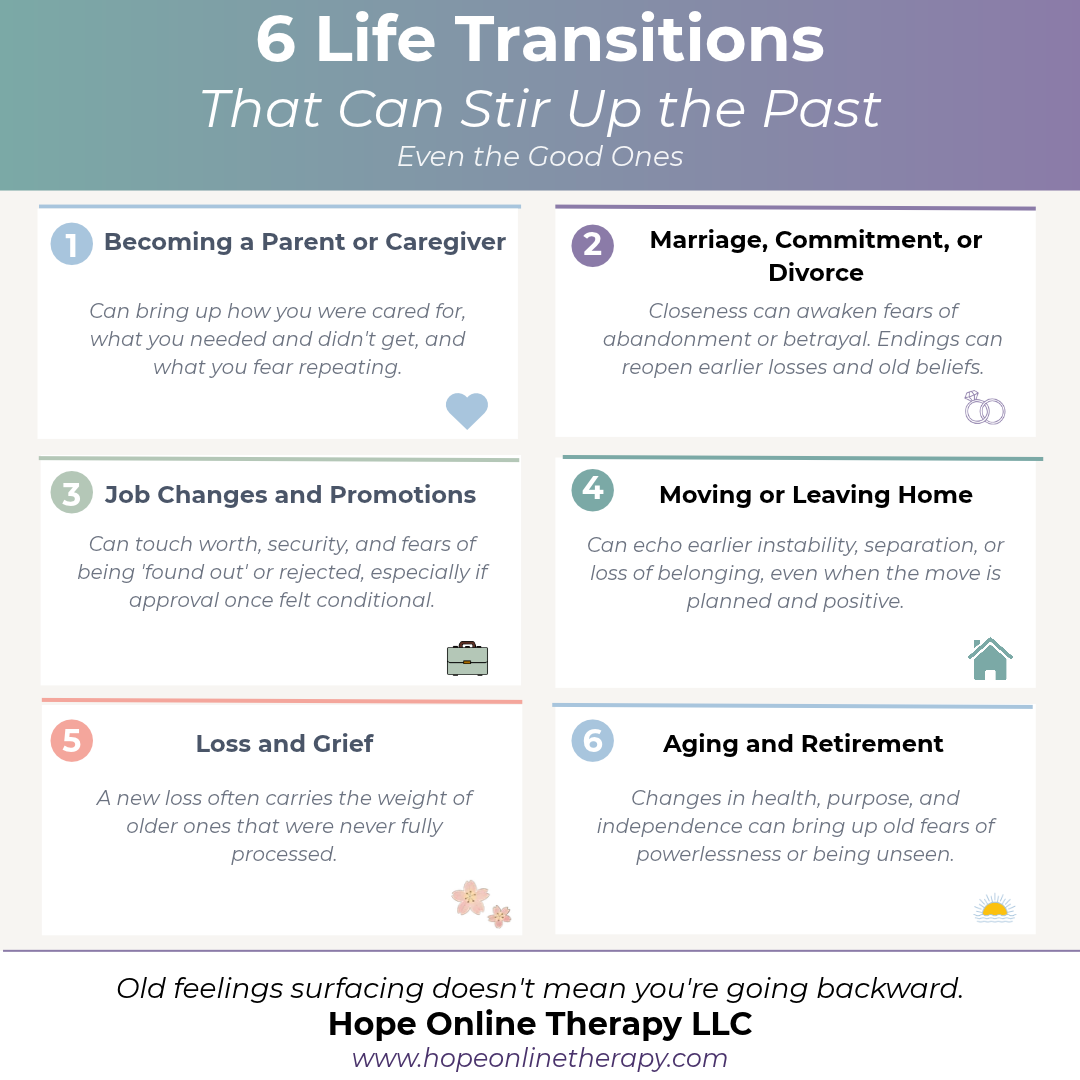
Becoming a Parent or Caregiver
Taking on responsibility for someone vulnerable can bring your own early experiences rushing back: how you were cared for, what you needed and didn't get, and what you fear repeating. Many new parents and caregivers are surprised by the grief, anxiety, or resentment that surface alongside love.
Marriage, Commitment, or Divorce
Deep intimacy asks for trust and vulnerability, which can activate old fears of abandonment or betrayal. Endings, whether divorce or a breakup, can reopen earlier losses and the beliefs that came with them ("I'm not enough," "People leave").
Job Changes, Promotions, or Layoffs
Career shifts touch identity, security, and worth. A layoff can echo past experiences of rejection or instability. A promotion can trigger fears of being exposed, judged, or held to impossible standards, especially for people who grew up in environments where approval felt conditional.
Moving or Leaving Home
Relocating, or watching a child leave home, can stir up feelings tied to earlier instability, separation, or loss of belonging. Even a planned, positive move can disturb your sense of rootedness.
Loss and Grief
Losing someone can reawaken earlier losses you may not have fully processed. Grief often arrives layered, with the current loss carrying the weight of older ones.
Aging and Retirement
Shifts in health, independence, and purpose can bring up old fears of powerlessness or being unseen. Retirement can remove the structure and identity that helped you feel secure.
A closer look at one example: Imagine someone who grew up in a home where love felt unpredictable. Years later, they're promoted into leadership and, instead of feeling proud, they feel intense dread and a persistent sense that they'll be "found out." On the surface, it's a career milestone. Underneath, the promotion is activating an old belief formed in childhood: that worth is conditional, and that one mistake could cost them acceptance. The reaction isn't really about the promotion. It's about what the promotion touches.
Signs a Transition Is Stirring Old Trauma
It can be hard to tell whether you're having a normal reaction to change or something deeper. Here are some signs the past may be involved.
Your emotional reaction feels bigger than the situation. The intensity doesn't match what's happening right now.
Familiar old feelings show up. Shame, fear, abandonment, or powerlessness that seem to belong to another time.
Your body is reacting. Tight chest, trouble sleeping, stomach issues, startle response, or feeling disconnected or numb.
You're falling into old patterns. People-pleasing, withdrawing, controlling, over-working, or shutting down.
You feel younger than you are. Reacting as if you're a child again, small, scared, or unsafe.
Memories or nightmares are resurfacing. Images, sensations, or dreams connected to earlier experiences.
You're having trouble feeling joy. Positive changes feel flat, threatening, or undeserved.
Noticing these signs isn't a sign of weakness or failure. It's information, and it's an invitation to give yourself more support.
How to Navigate a Transition When Old Pain Surfaces
You don't need to dig into your trauma to get through a transition. The goal is steadiness, not excavation. These approaches can help.
1. Name What's Happening
Simply recognizing "This change is stirring something old" can reduce its power. You're not crazy, and you're not failing. You're responding to a transition in a way that makes sense given your history.
2. Slow Down Where You Can
Transitions often come with pressure to move fast. Where possible, build in pauses: say no to unnecessary commitments, simplify your schedule, and give yourself time to adjust. Your nervous system needs room to catch up.
3. Keep (or Build) Anchors
Anchors are the stabilizing pieces of life that stay constant while other things change: a morning routine, regular movement, a trusted friend, time outside, a familiar ritual. Protect them. When so much is shifting, small consistencies provide safety.
4. Practice Grounding

When old feelings flood in, grounding brings you back to the present. Try noticing five things you can see, feeling your feet on the floor, or taking slow breaths with a longer exhale. The message to your body: I'm here, in the present, and I'm safe right now.
5. Separate Then from Now
When you notice an intense reaction, gently ask: What's true right now? What's different about this situation from the past? This isn't about dismissing your feelings. It's about helping your mind and body register that you have more choices and resources now than you once did.
6. Speak to Yourself with Compassion
Replace "What's wrong with me?" with "Of course this is hard." Self-criticism adds a second layer of pain on top of the first. Compassion helps your nervous system settle.
7. Communicate What You Need
People around you may not understand why you're struggling, especially if the change looks positive from the outside. Letting trusted people know you're having a hard time, even without full explanations, can reduce isolation. If your reactions sometimes spill into conflict, our post on how to communicate when you're triggered offers practical tools for pausing, regulating, and speaking honestly without making things worse.
8. Honor Mixed Feelings
You can be grateful and grieving at the same time. Excited and terrified. Proud and unsettled. Both can be true. You don't have to force yourself into feeling only joy during a happy change.
When to Consider Professional Support

Some difficulty during transitions is expected. But sometimes the reaction signals that old wounds need more than self-care.
Consider reaching out to a therapist if:
Your reactions feel overwhelming or last for weeks
You're experiencing flashbacks, nightmares, or intrusive memories
You're avoiding important parts of your life because of how you feel
Old patterns are damaging your relationships or work
You feel stuck, numb, or unable to function the way you usually do
You're using alcohol or other substances to cope
You're having thoughts of harming yourself
Trauma-informed therapy can help you understand how your past is shaping your present and give you tools to move through change with more steadiness.
What Trauma Therapy Can Offer
Approaches like trauma-focused CBT and EMDR (Eye Movement Desensitization and Reprocessing) are evidence-based treatments designed to help your brain process painful experiences so they lose their emotional charge. With EMDR, you don't have to narrate every detail of what happened, and many people find it helps reduce the intensity of reactions that surface during times of change. A trained trauma therapist can help you determine what approach fits your needs and pace.
You don't have to wait until things fall apart to seek support. Reaching out during a transition, when the past feels close, can be one of the most effective times to begin.
You're Not Going Backward
If a major change has stirred up old pain, it can feel like you've regressed, like all your healing has been erased. It hasn't.
Often, old feelings surface during transitions not because you've failed, but because there's finally enough safety, or enough pressure, for them to be felt. What's coming up may be asking for attention, care, and support that it never received.
You can honor where you came from, move through where you are, and still step into what's next. It takes patience, support, and compassion for the parts of you that are still carrying the past.
You don't have to navigate this alone.
Need Support Through a Life Transition?
If a major life change has stirred up old pain, anxiety, or overwhelm, therapy can help.
I work with adults in Texas and Idaho who are navigating transitions, healing from past experiences, and learning to feel steadier in the midst of change, including through evidence-based approaches like EMDR.
Virtual therapy means you can get support from the comfort of home, on a schedule that fits your life.
Schedule a Free Consultation– Let's talk about how therapy can help you move through this transition with more support and self-compassion.
You don't have to carry this alone, and you don't have to rush.
Important Disclaimer
This blog post is for informational and educational purposes only. It is not intended to be a substitute for professional medical advice, diagnosis, or treatment.
If you are experiencing trauma symptoms, intense emotional distress, or mental health concerns, please seek help from a qualified mental health professional. If you are in crisis or experiencing thoughts of self-harm, please contact emergency services or call or text the 988 Suicide & Crisis Lifeline.
The information provided here is meant to help you understand how life transitions can affect emotional wellbeing, but healing from trauma often requires professional support. Always consult with a licensed therapist or mental health provider for personalized guidance.